 TrailFox
Scavenger hunts
Winter Scavenger Hunt for Toddlers: 12 Things to Find on a Cold Walk
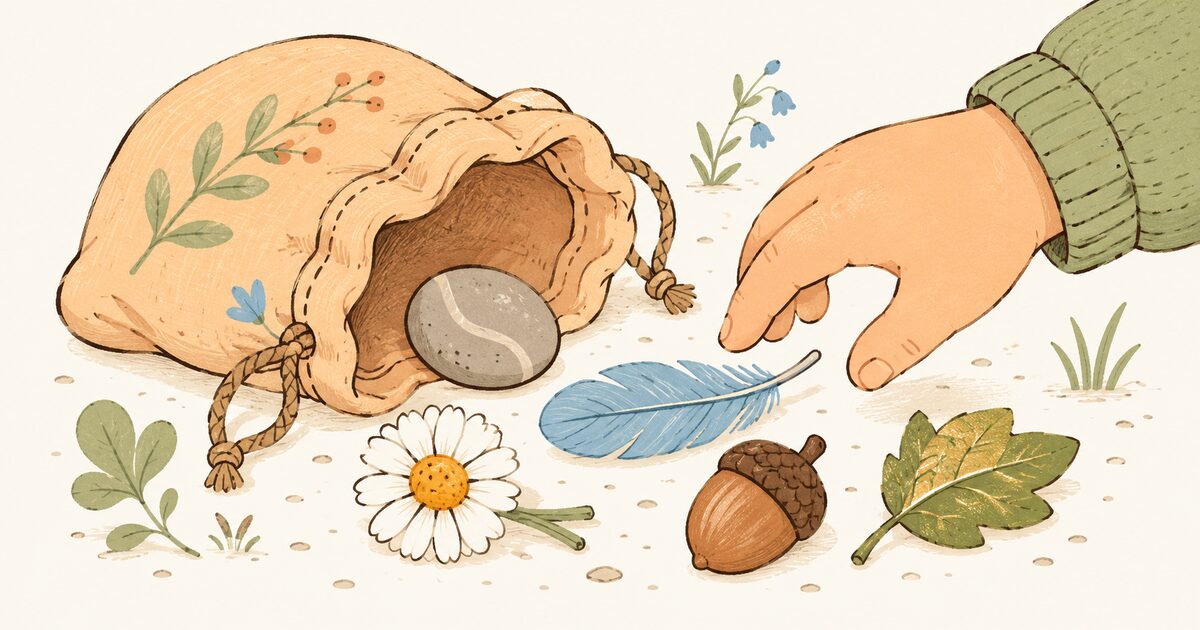
A winter scavenger hunt for toddlers works best when you don't bring a list. Your 2-year-old can't read one, and your 4-year-old would lose theirs in the first puddle on the drive. The whole technology is you saying "find me…" out loud and pointing them at a cold afternoon full of free, obvious treasure.
Below are twelve things to find on a cold UK walk, pitched at 2 to 5 year olds. We spot them most Novembers in West Lancashire, from the front gate to a scrappy local wood. Pick three or four, say them aloud, and start walking. The hunt is really a reason to be outside for another ten minutes.
What you need (and don't)
Wellies, warm layers, a coat pocket for treasure. No printable, no laminator, no clipboard. The NHS says children under 5 should be physically active for at least 180 minutes across the day, with light activities like standing, looking and pottering counting towards that total. A cold-weather hunt is a nice slice of it.
If you aren't sure what to put on them first, our guide to how to dress a toddler for cold weather covers the three-layer rule, mittens-not-gloves and the mid-walk check. Come back here when they're kitted out.
How to pitch it for 2s versus 4s
At two, three items is plenty, and each one needs to be obvious. Give them a role: carrier, pointer, snack chief. Then narrate everything they find in a sports-commentary voice, because at two the find is less interesting than the fuss made of it. If they get stuck, help them to it.
At three or four, aim for five or six items. Give them two at once and ask which they want to tackle first. Four-year-olds will negotiate, so you can swap items for ones they've just invented and keep the game going twice as long. For the youngest in a buggy, point and name the thing yourself: the pointing counts.
12 things to find on a winter walk
- Something red. A robin on a fence, a holly berry in the hedge, or a late rose hip.
At 2: the robin, because it hops onto fences and sings most of winter. At 4: three different reds in sight only, no touching the holly. - A knobbly pine cone. Under any conifer, usually in a scattered pile.
At 2: picking one up is the whole job. At 4: compare two, one open and one still shut tight for a drier day. - An icicle. Under a gutter, a tap, or a low branch after a frosty night.
At 2: let them touch one with a single mittened finger. At 4: who can measure the longest with their palm. - The crunch of frost underfoot. Grass is the loudest, bare mud comes next.
At 2: hold hands and step together. At 4: ten steps without looking down, then count the crunches. - A different bird call. Robins keep singing all winter, which makes them the easiest voice to pick out from the quiet trees.
At 2: stop walking and point at the sound. At 4: try to copy it, a thin warbling whistle for the robin. - Something that pricks a little. A holly leaf, a pine needle, a dried thistle head.
At 2: you present it, they prod with one finger. At 4: find three prickly things with hands behind the back, no picking. - A frozen puddle. On the pavement, in a tyre rut, on a mud path.
At 2: press one welly down and let the ice crack. At 4: see what is trapped underneath, a leaf, a twig, yesterday's footprint. - Any footprint. A dog's, your own, something smaller that could belong to a bird or a squirrel.
At 2: point at theirs and yours side by side. At 4: follow a strange trail until it runs out, inventing who made it. - A fat tree bud. On the ash, beech or rowan in the park, next spring's leaves are already waiting in brown cases.
At 2: lift them up to see one. At 4: gently peel a scale back to find the green inside. - Ivy on a tree. It climbs the trunk and stays dark green all winter, when everything else is bare.
At 2: say "find the green one" and let them point. At 4: follow it up and see how high it goes. - Breath you can see. Easiest against a dark coat or a dark fence.
At 2: puff on your palm with them. At 4: count the seconds until the dragon breath fades. - A tree silhouette. Look up, bare branches make brilliant shapes against the sky.
At 2: choose a shape for them: "that one is a broom". At 4: let them do the picking, a hand, a dinosaur, a map of a river.
🦊 A new winter hunt every day in the TrailFox app
The free TrailFox app has a Winter Wild pack of hunts, missions and slow-noticing games for the months of frost, mud and early dark. Nothing to print, nothing to buy, and it changes depending on where you're standing.


When they find nothing
Three ideas for the stretches when nothing on the list turns up.
First, make it smaller. Shift from "find me a holly berry" to "find me a seed", then to "find me something smaller than your thumbnail". There is always something smaller than their thumbnail.
Second, switch to sound. Stand still for one quiet minute and count the sounds. In a UK winter you'll usually get wind in branches, a dog, a car, a crow, and one mystery. The quiet minute is often the bit they remember.
Third, count breath dragons. Even a bare pavement has them, and our eldest finds everything else disappointing after this. The dragon game then lasts the walk home.
Everything they find is correct. A snail in November is a miracle, and the hunt was for miracles anyway.
Head in when it stops being fun
Twelve items is a plan, not a target. The hunt was a reason to be out, not an obligation to finish, and ending with warm hands and found treasures beats ticking a list with a cold grump. For other no-prep ideas sorted by season, start with the big outdoor activities for toddlers guide, or the winter outdoor activities for toddlers list for days when a hunt isn't what you need. Our toddler scavenger hunt ideas post has the all-season versions, and the nature activities for preschoolers list sits better with 3 to 5 year olds who want a proper mission.
Quick answers
How do you do a winter scavenger hunt with a toddler?
Say the items out loud, one at a time, and keep the list short. Three items is plenty for a 2-year-old and five or six for a preschooler. Everything they bring back counts, even if it isn't quite what you asked for. The hunt is really a slow walk with a purpose, so match the pace to whichever child looks coldest.
What can toddlers look for on a winter walk?
Red things like robins, holly berries and rose hips, knobbly pine cones, fat tree buds, frozen puddles, icicles under gutters and taps, and footprints in frost or mud. Senses count too: the crunch of frozen grass underfoot, the smell of wet pine, and breath you can see against a dark coat.
How long should a winter walk with a toddler be?
Twenty minutes outside is a sensible aim, broken into chunks of standing-and-looking rather than route-marching. The NHS asks for at least 180 minutes of physical activity a day for under-fives, and a cold hunt counts, including the quieter bits. Head home when they've found about half the list.
What is a frost activity for preschoolers?
Pressing a welly onto a frozen puddle, counting breath dragons against a dark coat, listening to the crunch of frost on grass, or spotting which blade stays white longest. All free, all a surprise the first time, and all over in five minutes if you want them to be.
Do we need to print a winter scavenger hunt checklist?
No, and your toddler can't read one anyway. A spoken hunt lets you follow what they actually notice. If they stop at a snail (they will), the hunt is about snails for the next ten minutes, and the walk is still a win.