 TrailFox
Seasonal
Winter Outdoor Activities for Toddlers: 15 Ideas for Cold Days
Winter is the season most parents quietly write off. It is dark by teatime, the coats take ten minutes, and the toddler has opinions about gloves. So everyone stays in, the house gets louder, and by Wednesday somebody is standing on the sofa.
The good news is that winter outdoor activities for toddlers are some of the easiest of the year. A frosty morning is a ready-made game. A puddle with a lid on it is a miracle. Fifteen ideas below, all startable in two minutes, and most over in twenty. The wider no-prep library is in our outdoor activities for toddlers guide.
Get dressed once, properly
Most winter misery comes down to being cold in one specific place, usually the hands. Layers beat one enormous coat: a vest, a warm top, a fleece, then a waterproof. Hat and mittens that stay on, and wellies over thick socks.
To check whether a toddler is warm enough, feel the back of their neck rather than their hands. Hands are always cold. If the neck is warm, carry on. If they are shivering or have gone quiet and pale, that is the signal to head home. If getting them into the coat is the real fight, our tricks for a toddler who won't go outside start exactly there.
Frost and ice
- The frost hunt. Go out on a cold morning before the sun reaches the garden and find the frost. Leaves, grass, the car roof, the top of the fence. Ask where it is thickest and where it has already melted. The answer is always "where the sun got to".
- Breath dragons. On a cold day every toddler is a dragon. Huff as big a cloud as you can, then turn it into a competition for the biggest, the smallest and the loudest.
- Stomp the puddle ice. A thin skin of ice on a shallow puddle is the best sound of the season. Crack it with a welly. Only shallow puddles you can see the bottom of, and never frozen ponds, lakes or canals. Ice that looks thick often is not.
- Footprints in the frost. Walk across a frosted lawn and look back at your trail. Then try walking backwards, on tiptoe, or like a giant. Work out whose footprints are whose.
- Touch the cold. A bare tree trunk, a metal gate, a wall, a fence post. Which is the coldest? Which feels softest? A very easy sensory game, and a good one for the age when they want to touch everything.
What is still alive in winter
Winter looks empty until you stand still for a minute. Then the garden fills up.
- Robin watching. Robins sing through winter and are bold enough to follow you round the garden, especially if you are digging. Stand still, say nothing, and see if one lands nearby. Our eldest will watch any bird for as long as it stays put, which makes this one easy.
- The bare tree game. Without leaves you can see the shape of every tree. Point at the branches and ask what the tree looks like. A hand, a broom, a monster, an antenna. Compare two trees.
- The last-leaf kick. Whatever is left on the pavement is still good for kicking through. Dry leaves rustle, wet leaves slap, frosty leaves crunch. Three sounds from one pile.
- Evergreen spotting. Holly, ivy, pine, yew. Which trees kept their leaves? A scavenger hunt with five green things in a brown month is deeply satisfying. Look, do not eat: holly berries and yew are poisonous.
🦊 Short days, short on ideas?
The free TrailFox app suggests an outdoor activity in about thirty seconds, matched to your child's energy and where you are, which is handy at 3:30 on a grey afternoon. The Night Explorers pack is built for the dark evenings. No ads, no subscriptions.


When it gets dark at four
- The after-tea torch walk. Give them the torch and walk round the block. Streets you know turn into somewhere else. We wrote the full guide to night walks with kids, including what to do if they get scared.
- Lights spotting. Count the windows with lights on, the ones with a tree in, the ones that are blue. Free and surprisingly absorbing.
- Moon and first star. Winter skies are clear and early. Find the moon, then wait for the first star. Wishing is optional but encouraged.
For the days that are properly horrible
Some days it is chucking it down, and some days the wind could remove a hat. Go anyway, briefly, and make it a mission rather than a walk.
- The ten-minute post run. Walk to the postbox or the end of the road and back, with a letter or a drawing to post. A purpose makes a short trip feel like a job, and a toddler on a job does not notice the weather.
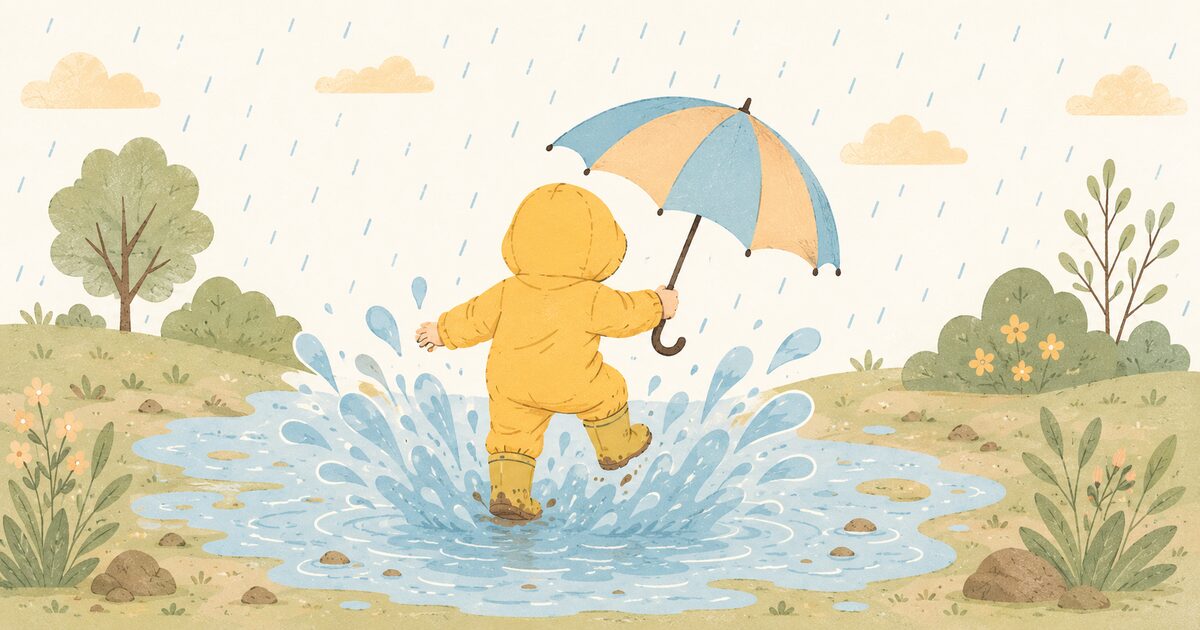
- Puddle jumping, winter edition. Waterproofs on, wellies on, find the deepest puddle you can safely reach. Our rainy day outdoor activities have twenty more where that came from.
- Hot chocolate at the end. Not an activity, a deadline. Tell them there is something warm waiting at home and watch them walk faster. A flask on the bench works just as well.
If your toddler has a favourite woodland, winter is a lovely time to see it again with the leaves gone. There are plenty more ideas in our guide to woodland activities for children.
Quick answers
What can toddlers do outside in winter?
Almost everything they do in summer, plus frost and ice. Hunt for frost on leaves and car roofs, stomp frozen puddles, make breath dragons, watch the robin that follows you round the garden, and kick through whatever leaves are left. Dress them in layers and keep the outing short, and winter is some of the best outdoor play of the year.
How cold is too cold for a toddler to play outside?
There is no single number, because wind and damp matter as much as temperature. If your toddler is dressed in layers, with a hat, gloves and boots, and is moving around, a cold dry day is fine. Go in if they are shivering, go quiet, or their hands and feet are very cold or look pale. Feel the back of their neck: warm means warm enough.
What should a toddler wear outside in winter?
Layers rather than one thick coat: a vest, a warm top, a fleece and a waterproof outer. Add a hat, gloves or mittens that stay on, and wellies with warm socks. Skip anything that makes it hard to move. If they are wearing a thick snowsuit-style coat, they will run hot, so unzip it as soon as they get going.
How long should a toddler stay outside in winter?
Twenty minutes is a good start, and short trips two or three times a day add up faster than you think. The NHS guidance is that under-5s need around three hours of physical activity a day, spread across the day, and that does not all have to be outdoors. Let your toddler's mood and hands tell you when to go in.
Is it safe to let toddlers play on frozen puddles?
Stomping a thin skin of ice on a puddle in the road or garden is a classic winter game, as long as it is shallow and you can see the bottom. Keep children well away from frozen ponds, lakes and canals. Ice that looks thick often is not, and a toddler cannot get themselves out of cold water.
What are free winter activities for toddlers when it gets dark at 4pm?
Use the dark rather than hiding from it. A short torch walk after tea, a lights-spotting stroll round the block, and looking for the moon and the first star all cost nothing. Our guide to night walks with kids covers how to keep it calm and how to finish without a bedtime meltdown.