 TrailFox
Tricky days
Toddler Won't Go Outside? 10 Gentle Tricks That Work
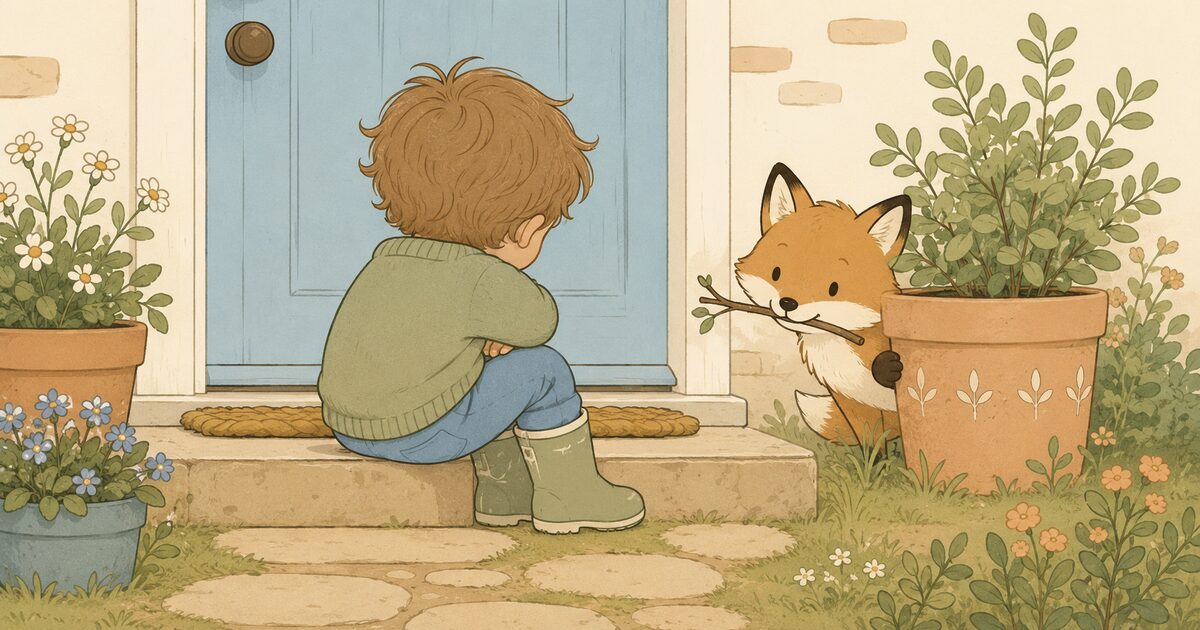
There is a special absurdity to it: the child who was feral indoors all morning, who you know needs to run, flatly refusing the one thing that would fix everything. You're offering fresh air, freedom and puddles. They're reacting like you proposed a tax audit.
First: you're not doing it wrong. Refusing the obviously-good thing is toddlerhood's entire brand. Second: this is fixable, and not with bribes or battles — with friction removal. Here's what's actually going on, and the ten tricks that work in real houses on real Tuesdays.
Why toddlers refuse (it's not about outside)
Watch closely and you'll notice the fight almost never happens outdoors. It happens at the door — because the real enemy is the transition. A toddler mid-activity, even mid-boredom, experiences "we're going out" as "stop your thing". The destination is irrelevant; they'd resist a trip to a chocolate fountain if it interrupted the sock they were talking to.
That reframe matters, because it means you don't need to sell the outdoors. You need to shrink the doorway. Every trick below is a doorway-shrinker.
The ten tricks
- Race the kettle. "Kettle's on — can you get your wellies on before it clicks?" A deadline that isn't you can't be argued with. The kettle is a neutral third party and toddlers respect it.
- The snack defects. Don't offer a snack for going out — move the snack out. The mid-morning banana now lives on the doorstep. Kids follow food; this is older than agriculture.
- Mission framing. Never "shall we go outside?" (a proposal, and proposals get vetoed). Instead: "The postbox needs us." "There's been a report of snails." Missions have urgency; walks have negotiations.
- You go first, and be interesting. Stop recruiting and just… go. Crouch at something in the garden. Say "huh!" quietly. Toddlers can resist an instruction indefinitely, but a parent having a private discovery is unbearable.
- Wellies live by the door. Every step between deciding and leaving is a chance to lose them. Coats and boots at toddler height, by the door, kills half the transition cost outright.
- The two-minute deal. "Two minutes, then we come in if you want." Anyone can do two minutes — and once boots hit ground, momentum takes over nine times out of ten. The tenth time, honour the deal cheerfully. That's what makes it work next time.
- The choice that isn't a choice. "Garden or street?" Not "outside or not?" Toddlers accept almost anything they feel they picked. Sommeliers use the same trick.
- The outside-only object. Some object exists only outdoors: the puddle-measuring stick, the special stone collection, the garden binoculars (fists). Scarcity marketing, aged two.
- The stuffed delegate. Teddy needs his walk. You're not going outside; you're taking Teddy, who insists. Responsibility works where enthusiasm fails, and Teddy takes the blame for the weather.
- Lower the bar to the doorstep. On the hardest days, the doorstep counts. Sit on it together with the defected snack. Half these sits turn into wanders; the other half are still air, light and a win.
🦊 The other half of the problem
Getting out is half the battle; "what do we even do out here" is the other half. TrailFox answers it in thirty seconds — activities matched to their energy and where you're standing, from calm decks for reluctant days to full romps. Free, no ads, no subscriptions.


When none of it works
Some days lose. Illness recovery, a developmental leap, or plain old Tuesday-ness can produce a refusal no trick touches — and forcing it teaches exactly one lesson: outside is the thing we fight about. That's the only genuinely losing move.
Come in, close the door without ceremony, and try again after lunch, or tomorrow. The campaign is won by outside staying normal, boring even — a thing this family just does, like teeth. (The same low-stakes logic drives the 20-minute screen-free reset — transitions, it turns out, are the whole game.)
And for the day the refusal breaks and you're suddenly outside with a live toddler and no plan: the big guide has thirty ideas, and the energy-burning list handles the days they come out swinging. And if the refusals now come with arguments attached rather than tears, they are probably four, which has its own playbook: outdoor activities for 4 year olds.
Quick answers
Why does my toddler suddenly hate going outside?
It's almost never the outdoors itself — it's the transition. Leaving the current activity is the fight, whatever the destination. Refusal phases also just happen: after illness, around developmental leaps, or because Tuesday. It passes, usually as suddenly as it arrived.
Should I force my toddler to go outside?
No — force wins the moment and loses the campaign, teaching them outside is the thing that gets fought over. Friction removal beats force every time: shrink the ask, add a mission, make the snack defect outdoors, and let some days genuinely lose.
How long should we stay out if my toddler resists?
Two minutes counts. Momentum usually takes over once boots hit ground — but if it doesn't, come in cheerfully and try again later. The goal is keeping outside a normal, low-stakes part of the day, not hitting a duration target.
My toddler refuses to walk and wants carrying — is that failure?
Not remotely. A carried toddler outside still gets the air, the light, the noticing and the change of scene — and the walking comes back on its own, usually the moment something interesting appears at ground level. Carried beats not-outside, every time.
Is it bad if we skip outside time some days?
No. Some days lose — illness, weather beyond the pale, everyone's just done. Outdoor time works as a rhythm, not a streak; one skipped day costs nothing as long as the door opens again tomorrow.