 TrailFox
By age
Outdoor Activities for 4 Year Olds: The Golden Age
Something quietly brilliant happens at four. The best outdoor activities for 4 year olds are not harder versions of toddler activities, they are a different category altogether, because a four-year-old can suddenly do three things a two-year-old cannot: hold a rule in their head, follow a story, and keep going.
That combination is why four is the golden age outdoors. You can say "the pavement is lava, the drain covers are safe islands" and they will not only understand it, they will enforce it, extend it, and still be playing it four streets later. Try that at two and you get a blank look and a request to be carried.
Twenty-two ideas below, sorted by what makes them work.
What actually changes at four
Two-year-olds want to handle the world: pouring, carrying, dropping, inspecting the ground. If that is where you are, our outdoor activities for 2 year olds is built for exactly that and this list will mostly bounce off.
Four-year-olds want a plot. The same puddle that was a thing to stamp in at two becomes a crocodile lake at four, with a crossing procedure, a designated safe rock, and consequences. It lasts three times as long, and you barely have to be involved once it starts.
Worth knowing for the guilt: NHS guidance is that under-fives should be active for around three hours spread across the day. That sounds impossible until you notice it counts the nursery walk, the messing about in the garden and the climbing at the park. It is not three hours of organised exercise.
Games that need a rule
- The floor is lava. Pavements, playgrounds, tree roots, park benches. Nominate the safe surfaces and go. The classic, and four is exactly when it lands.
- Traffic lights. Green run, amber tiptoe, red freeze. Add "purple means hop backwards" once they have got it, because four-year-olds love an amendment.
- Grandmother's footsteps. You face the wall, they creep, you spin round. The comedy of the freeze is the whole game and it never gets old.
- Shadow tag. You tag by standing on someone's shadow instead of touching them. Only works on a sunny day, which is exactly why sunny days should be spent on it.
- The obstacle course they design. Hand over the design job entirely. Round the tree, under the bench, along the wall, three star jumps. Your only role is to attempt it badly and be timed.
- Simon says, outdoor edition. Touch something rough. Touch something a bird has touched. Stand on one leg on something green. Sneaky nature curriculum, unnoticed.
🦊 Stop being the one who invents the game
The exhausting bit at four is not the running, it is being the entertainment director. The free TrailFox app asks how much energy your child has and where you are, then hands you an activity you can start in about two minutes. Explorer profiles mean it grows with them, and the themed packs add minibeasts, night walks, mud and each season. No ads, no subscriptions.


Games that need a story
This is the new superpower at four, and it is the most efficient parenting tool available outdoors. A story converts walking, which they hate, into travelling, which they love.
- The expedition. You are crossing a continent. The park bench is base camp, the hedge is the jungle, the bin is a supply depot. Announce the terrain as you go and they will supply the peril.
- Delivering to the fairies. A shopping list of tiny things to leave in a tree hollow: one soft leaf, one acorn cup, one petal. Knock when you deliver. Come back next week to check.
- The lost explorer. They are the guide and you are hopeless. You do not know what a leaf is. You keep going the wrong way. A four-year-old will happily lead you around a park for half an hour being exasperated by you.
- Dinosaur tracking. Every muddy mark is evidence. Measure the footprint with your own feet, follow the trail, discuss the size of the animal. The conclusion is always "quite big".
- Secret agents. A mission to observe the street without being seen. Count the red doors, do not be spotted by the postman. Whispering is mandatory and, remarkably, actually happens.
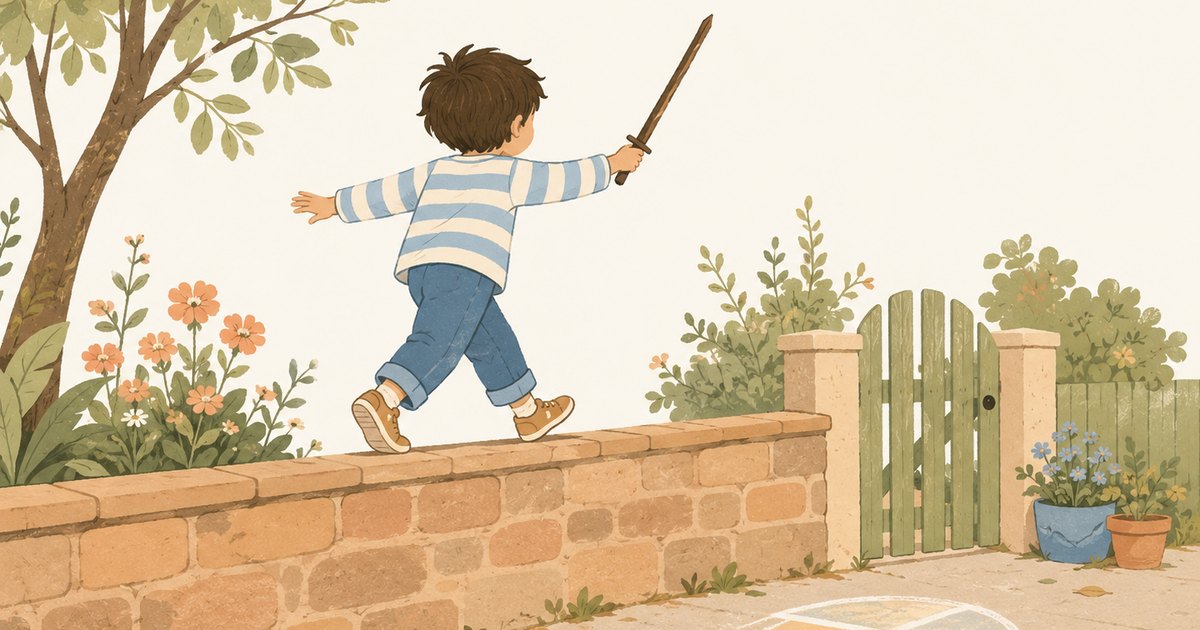
- The pirate walk. The kerb is the ship's edge, drains are sharks, a stick is a cutlass. Anywhere becomes somewhere.
Big energy, and the legs to last
- The stick throw walk. Everyone throws a stick as far as they can, then everyone walks to the furthest one, then again. You will cover a surprising distance with zero complaints.
- Races with silly rules. Backwards to the lamppost, hopping to the gate, slow-motion to the bench. Slow-motion racing is much harder than it looks and is very funny to watch.
- Puddle long jump. Standing start, measured in wellies. A whole afternoon of competitive sport, provided by British weather at no cost. More of this in the rainy day list.
- Hill rolling. Any slope. No further instructions required, and it is the fastest known route to a child who will eat their tea.
- The playground, used properly. Four is when the swings start to bore them, and the park stops being a playground and becomes a landscape. That transition is the whole subject of park games beyond the playground.
- Tree tag in the woods. Trees are home, bark means safe. The best possible use of a scrappy local wood, along with seventeen other woodland activities.
Jobs that make a four-year-old feel enormous
Competence is the great four-year-old currency. Real responsibility, however small, beats any game you can invent.
- Chief navigator. They choose every turn on the walk. You go where they say. You will end up somewhere stupid and that is the point.
- Official weather reporter. They check the sky before you leave and decide the coat policy. Being wrong occasionally teaches more than being told.
- Litter patrol. One piece each, gloves or a stick, hands washed after. Four-year-olds are genuinely outraged by litter and will take this appallingly seriously.
- Keeper of the record. They decide what gets photographed and what counts as the find of the day. Give them the job properly and it turns into a habit, which is really what a family nature journal is for.
When four goes wrong
Four also brings negotiation, and a four-year-old who does not want to go outside will out-argue you. The fix is almost never a better activity, it is a better framing. Do not announce a walk. Announce a job: post this letter, check whether the conkers have dropped, count the cats on our street. If you are hitting a wall at the front door most days, this is the piece to read.
And for the full library sorted by whether you are in a garden, park, street or woods, the big guide is outdoor activities for toddlers, which still holds up at four for the days when nobody has the energy for a plot.
Quick answers
What outdoor activities are good for 4 year olds?
Anything with a rule or a story in it. At four a child can hold a rule in their head, take turns and follow a plot, so games like tag variants, obstacle courses, treasure hunts with clues and long imaginative missions all suddenly work. Two-year-old activities still work too, they just run out faster.
How long can a 4 year old walk?
Much further than you think, as long as the walk is not the point. A four-year-old who is bored of walking will complain after ten minutes, and the same child on a mission will cover a couple of miles without noticing. Give the walk a job and the distance takes care of itself.
How much exercise does a 4 year old need?
NHS guidance is that children under five should be active for around three hours spread across the day. That sounds enormous until you realise it counts everything: the walk to nursery, messing about in the garden, climbing on things at the park. It is not three hours of organised exercise.
What is the difference between activities for 2 year olds and 4 year olds?
Two-year-olds want to handle things: pouring, carrying, dropping, inspecting. Four-year-olds want a plot and a rule. The same puddle is an object to stamp in at two and a crocodile-infested lake with a strict crossing procedure at four, and the four-year-old version lasts three times as long.
What can a 4 year old do outside on their own?
In a garden or enclosed space, plenty: digging, collecting, building, an obstacle course they invented. Four-year-olds play far better when an adult is nearby but visibly not joining in. Being watched is enough. Being organised turns their game into your game and it usually ends faster.
How do you get a 4 year old to go outside when they refuse?
Do not announce a walk. Announce a job: post this letter, check whether the conkers have dropped, count the cats on our street. Four-year-olds refuse abstractions and accept missions. Getting out of the door is almost always about the framing rather than the activity.