 TrailFox
Woods
Woodland Activities for Children: 18 Things to Do in the Woods
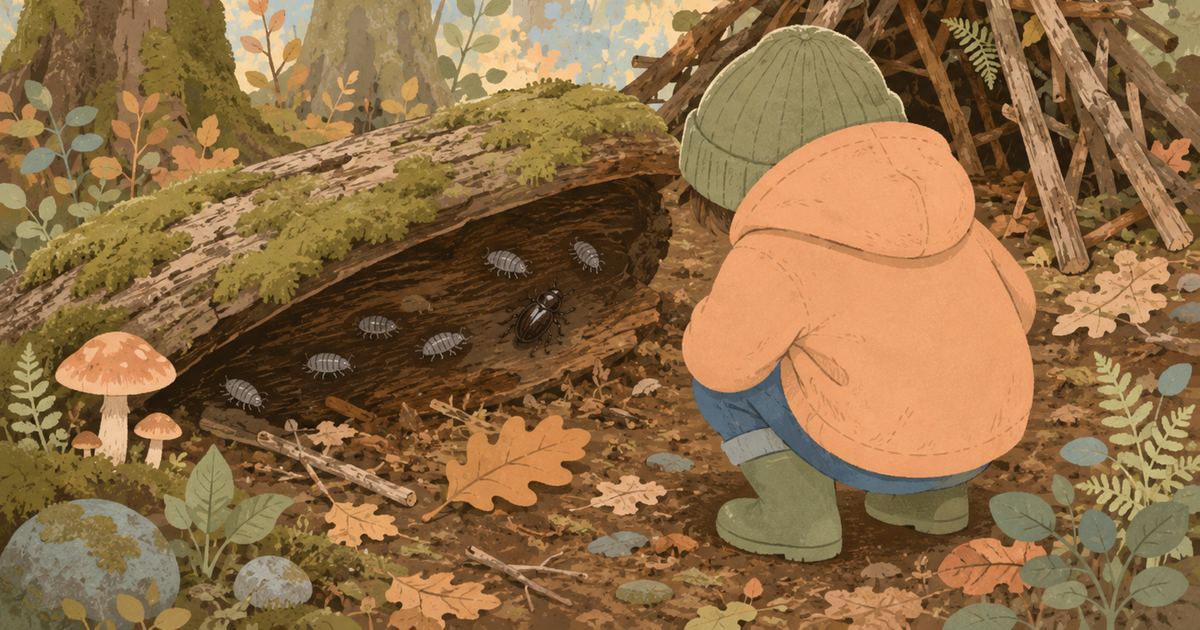
The best thing about woodland activities for children is that you can turn up with nothing. No bag of kit, no plan, no craft supplies. A wood is a room already full of toys, and every one of them is free, replaceable and improved by being a bit damp.
The second best thing is that woods forgive a bad day. If your child is feral, there is space to run and logs to climb. If your child is flat and clingy, there is moss to poke and a beetle to watch. Same wood, two entirely different afternoons.
Eighteen ideas below for roughly ages 2 to 8. Most take ten minutes. None need anything you have to carry in.
Two rules, then you can stop thinking
Set these once, at the entrance, and the rest of the trip runs itself. One: fungi are for looking at, never for picking or eating. Say it like an expedition rule and children take it extremely seriously. Two: stay where you can see the grown-up. Woods scramble a small child's sense of direction fast, and a tree they can always come back to fixes it.
Kit is wellies, a coat that is allowed to get ruined, a snack and a pocket for treasure. That is the whole list.
The first ten minutes
Arrival is when a woodland trip is won or lost. Do not start walking. Start doing something.
- Roll a log. The single greatest activity in any British wood. Tip one over, look at the woodlice, beetles, worms and springtails going about their business, then roll it back exactly as it was so everyone can go home. That last part is the bit worth teaching.
- Choose your stick. Everyone selects one stick and it is theirs for the whole trip. It has a name by the end. It comes home in the car whether you like it or not.
- The first balance beam. Any fallen trunk under about knee height. Along it, back again, then jump off with a countdown. Repeat until the novelty dies, which is roughly eleven minutes.
- Bark rubbing with fingers. No paper, no crayons. Just hands on oak, then birch, then a smooth beech, and talking about which one feels like an elephant.
Building things out of the wood itself
- The lean-to den. Find a fallen trunk or a low branch, lean sticks along it, argue about the doorway. It never gets finished and it does not matter. The building is the activity, not the den.
- Fairy houses at the base of a tree. A moss carpet, a bark roof, an acorn cup for a sink, a leaf for a door. Leave it for the next family to find. Coming back a week later to check on it is a whole second activity.
- The stick sculpture. Lay sticks on the ground into a shape: a giant star, a face, the initial of everyone's name. Photograph it, leave it, let the wood take it back.
- Dam a trickle. Any tiny stream or muddy channel. Stones and sticks and mud, and total absorption for forty minutes. Take the dam out before you leave, which is a nice piece of low-key countryside manners to teach.
- The bug hotel. A pile of bark, sticks and leaves in a damp corner. Come back next time and see who moved in. Nobody has ever moved in, and it does not diminish the excitement in the slightest.
🦊 A woodland activity, picked in thirty seconds
Standing in a wood inventing games from scratch is harder than it sounds, especially at four in the afternoon. The free TrailFox app asks how much energy your child has and where you are, then suggests something you can start immediately. Several of the activity packs, including Minibeast Safari and Autumn Treasures, are built for exactly this. No ads, no subscriptions.


Slow games, for noticing
These are the ones that turn a wood from a place you walk through into a place you look at. They also work brilliantly on a child who is tired but not yet ready to admit it.
- The one-minute sit. Everyone sits on a log and says nothing for sixty seconds. Then compare what you heard. A four-year-old can just about manage this, and the results are always better than you expect.
- Fungi safari. Autumn woods are extraordinary for this. Look on dead wood, at the base of old trees, in damp leaf litter. Count how many different kinds you can find without touching a single one.
- Look up. Children inspect the floor by default. Deliberately spending five minutes only looking upwards finds nests, holes, squirrel dreys, dead branches and the way the canopy moves.
- The colour match. Pick up one leaf, then find three more things that are almost exactly the same colour. Much harder and more interesting than it sounds, and it works in any season.
- Track hunting. Mud is a record of everything that has walked past. Dog, bird, human, bike, and once in a while something genuinely exciting like a deer slot.
When they arrive with too much energy
- Tree tag. Trees are home. You are safe while touching bark. This makes a wood into the best possible playground and burns an alarming amount of energy, which is the entire premise of our energy-burning list.
- The stick throw. Everyone throws a stick as far as they can, then everyone walks to the furthest one. Repeat. You will cover a mile without a single complaint about walking.
- Poohsticks. Any bridge over any water. Undefeated since 1928.
- The puddle survey. Rank every puddle on the path out of ten for depth, splash and general quality, and then test your rankings properly on the way back. Wet woods are the best woods, which is the argument we make at length in rainy day outdoor activities.
Making it a habit rather than a big day out
The families who get the most out of woods are not the ones driving an hour to a famous forest. They are the ones with a scrappy patch of trees fifteen minutes away that they visit constantly, in every weather, and know intimately. Same wood, forty times a year, beats a nature reserve twice.
If you want the structure of forest school without the waiting list or the fees, most of it transfers to a local wood or even a large garden: we broke down how in forest school at home. For the youngest explorers, the gentler versions live in nature activities for preschoolers. In autumn, add conkers and the wood does half your work for you. And the full no-prep library, sorted by whether you are in a garden, park, street or woods, is outdoor activities for toddlers.
Quick answers
What can children do in the woods?
Almost everything they want to do anyway, with better props. Rolling logs to see what lives underneath, building dens against a fallen trunk, balancing along branches, damming a trickle of water, hunting fungi and collecting sticks. The woods supply the equipment, so you can arrive with nothing.
What age can you take a toddler to the woods?
As soon as they can walk, and before that in a carrier. A newly walking toddler will happily spend forty minutes covering thirty metres of path, and that is a successful woodland trip. Pick somewhere with a firm track, expect to go nowhere slowly, and let the first fallen log be the destination.
Is it safe for children to touch mushrooms in the woods?
Teach one absolute rule and it becomes easy: we look at fungi, we point at fungi, we photograph fungi, we never pick or eat them, and we wash hands when we get home. Making it a solemn expedition rule tends to make children more interested rather than less.
What should you take to the woods with young children?
Wellies, a coat that is allowed to get filthy, a snack and a bag for treasure. That is genuinely it. Everything else you might buy is already lying on the woodland floor, and a child with a good stick does not need anything you brought from home.
How do you keep children interested on a woodland walk?
Stop trying to walk. A woodland trip with under-fives works best as a series of stops with a bit of walking between them, so give each stretch a mission: find the biggest leaf, roll one log, balance along one branch. The walk happens as a side effect.
Are woods good for children in winter?
Better in some ways. Bare trees mean you can see nests, squirrels and the shape of the wood itself, the mud is at its finest, and frost turns puddles into something worth breaking. Wrap up, go for half the usual time, and take a flask.