 TrailFox
Woods
Forest School Activities at Home: 12 Ideas Without the Fees
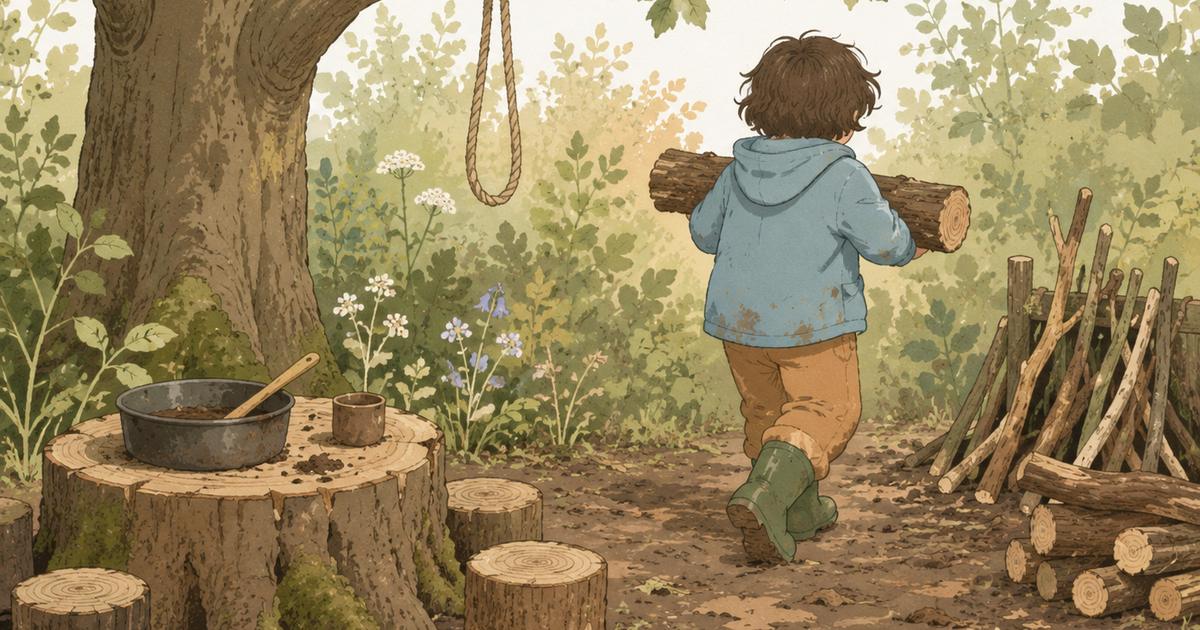
Forest school has a waiting list problem. The good local sessions fill in a morning, the fees add up over a term, and plenty of families never get a place at all. So the search for forest school activities at home is really a search for the same thing on a Tuesday afternoon, in a garden, for nothing.
Most of it transfers. Some of it genuinely does not, and we will be straight about which is which.
What forest school actually is
Parents tend to picture a woodland curriculum with activities and outcomes. It is close to the opposite. A session is mostly unstructured play in the same patch of woodland, week after week, with adults following the children rather than running a timetable. The distinctive parts are the repetition, the length, the child-led bit and a deliberately sensible attitude to risk.
Which is good news, because three of those four are free. The parts you cannot easily reproduce are the trained leader, the group of other children, and the fire circle. Everything else is available to you already.
The rhythm matters more than the activities
If you take one thing from this article, take this rather than the list below.
- Same place, over and over. One tree, one hedge, one corner of the park. A familiar scrappy patch beats a spectacular forest visited twice a year, because familiarity is what lets a child stop looking and start playing.
- Stay too long. The good play starts after the boredom, which usually arrives around the twenty-minute mark and is the exact moment most of us go home. Push through it once and you will see the difference.
- Follow them. If they want to spend forty minutes on one puddle, that is the session. Your suggestions are a backup, not a plan.
- Let them get it wrong. Climbing slightly too high, carrying something slightly too heavy, getting slightly too wet. Managed risk is the point rather than a side effect.
Twelve activities that carry over
- Adopt a tree. Pick one, visit it all year, photograph it every time. Buds, leaves, conkers or acorns, bare branches, back to buds. It is the single best long game in outdoor play with children.
- The lean-to den. Sticks against a fallen trunk, a fence, a wall or a washing line. It will never be finished. Building is the activity.
- Log rolling. Turn one over, meet the woodlice and beetles underneath, roll it back exactly as it was. The rolling back is the lesson.
- Mud kitchen, no equipment. A flat stone is a worktop, an old pan or a yoghurt pot is the whole kit. Menus get elaborate. Nothing is eaten.
- Bark and leaf sorting. Collect, then group by colour, size, texture or a category the child invents and refuses to explain. Very forest school, and free.
- Whittle-free tool play. Real knives are the bit to be careful about at home. The feeling survives without them: peeling bark by hand, snapping sticks to exact lengths, digging with a trowel, sawing nothing in particular with a stick.
- Carry something heavy. A log across the garden, a rock to a specific spot, a full watering can. Children are strikingly underemployed and love being genuinely useful.
- Rope and string knots. One length of string and a fence. Tie things, untie things, make a swing for a teddy that fails structurally.
- The sit spot. Everyone picks a place, sits, stays quiet for one minute, then reports. This is a real forest school staple and it works from about three.
- Fire, but honestly. A campfire is where home forest school usually stops, and there is no shame in that. If you want the ritual without the risk, a torch in a den at dusk does a surprising amount of the same work. The full after-dark version is in night walks with kids.
- The weather session. Go in the worst weather on purpose, once. Nothing builds an all-weather child faster, and the rainy day activities list is where to start.
- The reflection. Sessions end by asking what the best bit was. Do it on the walk home. It takes ninety seconds and it is the part that makes children remember the day at all, which is also why a family nature journal works so well.
🦊 The hard part is not the activity, it is deciding
Forest school leaders have years of ideas in their heads. On a Tuesday at four o'clock, you have none. The free TrailFox app asks your child's energy level and where you are, then suggests something you can start in two minutes, so the session begins instead of being negotiated. The Minibeast Safari and Wild Skills packs lean closest to the forest school end of things. No ads, no subscriptions.


You do not need woods
The word forest does a lot of unhelpful work here. A garden will carry almost all of this. So will a hedge along an alley, a corner of a playing field, or one street tree you decide is yours. If you have got a garden and no woodland within reach, garden games for toddlers covers the small-space version, and nature activities for preschoolers is the closest thing we have to a full home curriculum.
If you do have a wood nearby, even a scrappy one, that is the jackpot. Woodland activities for children has eighteen more.
What you are actually buying when you pay for forest school
Worth saying plainly, because the home version is not a perfect substitute. You are buying a trained leader who can run fire and tools safely, other children to play with, and a fixed slot in the week that happens whether or not you can face it. That last one is the real product, and you can copy it for free by putting the same hour in your calendar every week and treating it as unmoveable.
Do that for a term and you have got most of forest school. For the wider library of no-prep ideas sorted by where you are, start with outdoor activities for toddlers, and if screens are the thing you are trying to get out from under, the 20-minute reset is the gentler way in.
Quick answers
Can you do forest school at home?
You can borrow most of it. What transfers is the approach: going to the same outdoor spot regularly, letting the child lead, allowing sensible risk, staying long enough to get bored and out the other side. What does not transfer is the qualified leader, the group of children and the fire circle.
What do they actually do at forest school?
Far less than parents imagine. A typical session is mostly unstructured outdoor play in the same patch of woodland, with the adults following the children's interests rather than running a timetable. Den building, tool use, fire, mud, climbing and long stretches of apparently doing nothing.
Do you need woods to do forest school activities at home?
No. A garden, a scrap of park, a hedge along an alley or a single tree you visit repeatedly will carry almost all of it. Returning to the same small place again and again is what does the work, and a familiar patch beats a spectacular forest you visit twice a year.
What age is forest school for?
Sessions typically run from around three upwards, though the approach works from the moment a child can walk. With under-threes you drop the tools and the fire and keep everything else: the same spot, the child leading, the long unhurried stretch of time, the mud.
Is it safe to let young children use tools outdoors?
Real tools are the part to be most careful with at home, because trained leaders teach them one to one with strict rules. A safer home version keeps the same feeling: peeling bark by hand, snapping sticks to length, digging with a trowel and carrying something genuinely heavy.
How long should a forest school session at home be?
Longer than feels natural. The interesting play usually starts after the point where a child announces they are bored, so aim for an hour in one place rather than three quick stops. If you only have twenty minutes, go to the same twenty-minute spot every time instead.