 TrailFox
Seasonal
Night Walks With Kids: The After-Dark Adventure Guide
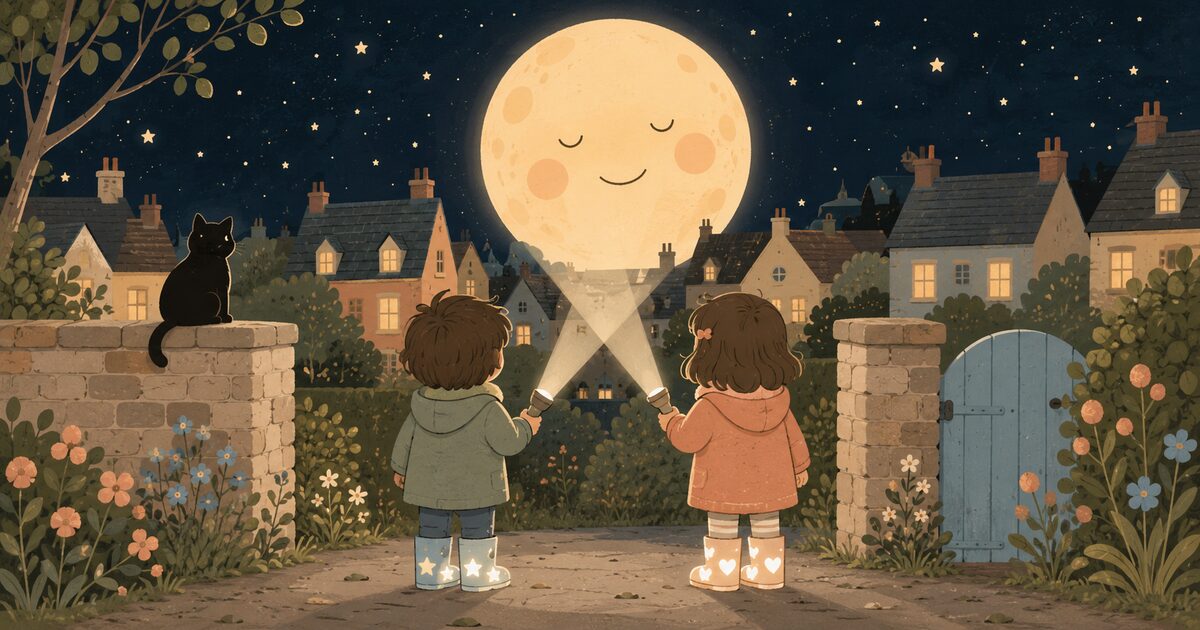
Every October, British parents face the same maths: the clocks are about to go back, it'll be dark by teatime, and the outdoor window between school pickup and dinner is about to slam shut for five months.
Unless — hear us out — the dark is the window. Because here's what a £3 torch knows that the sofa doesn't: the same ten doors of pavement you've walked a thousand times becomes a different country after dark. New sounds, new creatures on shift, shadows with personalities, and a moon that follows you personally. Kids don't experience night walks as a lesser daytime walk. They experience them as a heist.
The kit (all of it)
- A torch each. The cheap kind. This is non-negotiable — a shared torch is a diplomatic incident waiting to happen, and personal torch ownership is half the magic.
- Warm layers. Standing still to look at the moon is colder than walking. Hats change everything.
- Optional sparkle: anything reflective or light-up on coats and wellies. Sold as safety kit; worn as jewellery. Everyone wins.
💡 Timing hack: in deep winter you don't even need a late bedtime — "night" starts at 4:30pm. The full adventure fits between school and dinner.
First night walks
- The ten-door torch safari. The front door safari you know, after dark. Same ten doors, entirely new findings: moths, shadows, one extremely surprised cat.
- Shadow monsters. Under each lamppost, your shadow grows, shrinks and multiplies. Make it enormous. Make it tiny. Make it fight the other shadow. Lamppost-to-lamppost is the night version of our daytime lamppost challenges.
- Moon following. Find the moon, then walk — "it's following us!" It genuinely appears to, and a small person discovering this is one of parenting's great free spectacles. Wave goodnight to it at the door.
- The lit-window count. How many golden windows on the street? (Counted politely, from the pavement.) Cosy, quantifiable, and oddly philosophical: everyone's in there, and we're out here, adventuring.
- The listening minute, night edition. Same game as daytime, utterly different results: distant traffic, wind, a dog two streets over, something rustling that is definitely a hedgehog and not a crisp packet.
🦊 A whole deck for after dark
The Night Explorers pack in TrailFox is exactly this: a full deck of after-dark adventures, from garden torch safaris to proper moon missions. The core app is free — no ads, no subscriptions — and dark-by-teatime season is precisely what it was built for.


Levelling up
- The garden night safari. Your own garden, torches on: snails commuting up walls, slugs on manoeuvres, spiders centre-web like tiny landlords. The daytime garden runs a completely different night shift.
- Owl listening. Park or wood edge, torches off, one quiet minute. Manage expectations: some nights it's an owl, most nights it's a pigeon with insomnia. Any bird counts. The listening is the win.
- Star basics. Find the moon. Find one bright "star" (probably a planet — say so, it's cooler). Done. Astronomy at toddler dosage; save the constellations for age seven.
- Torch code. Flash messages between family members: one flash hello, two flashes biscuits. Invent your own signals. This is technically communications engineering.
- The night picnic. Hot chocolate on the doorstep, blanket, torches planted like campfire. The grand finale that makes them ask to go again — same psychology as the towel ritual in the rainy day guide: end warm, and the memory files itself under "again, please".
Safety, quickly
The dark changes the atmosphere, not the risk profile of your own street. The basics, one notch up from daylight: hands held near roads, torches pointed down (not at eyes — establish this law early and enforce it like the welly-throwing rule), familiar routes only, and one adult per committed wanderer. That's it. This isn't wilderness; it's the pavement with the contrast turned up.
If getting out the door is the harder battle — dark evenings do strengthen the sofa's gravitational pull — the after-dark mission is one of the best reluctance-breakers there is: see the gentle tricks list and lead with "torches or lantern?" rather than "shall we go out?".
Autumn hands you two months of perfect night-walk conditions before real winter bites — the same limited-run logic as conker season. Torches ready. Late October is the peak of it, and Halloween nature activities for kids is the seasonal version of everything here.
Quick answers
What age can you take kids on a night walk?
Any age you'd walk them in daylight — it's the same street with better lighting effects. Toddlers in carriers love the novelty; walking-age kids get torches and jobs. The route is the safety variable, not the age: familiar pavements only.
What do kids need for a night walk?
A torch each (the £3 kind — this is non-negotiable to the child), warm layers, and optionally something reflective or light-up on coats or wellies, which kids treat as jewellery anyway. That's the complete kit list.
Are night walks safe for toddlers?
With the daylight basics turned up one notch, yes: hands held near roads, torches pointed down not at eyes, familiar routes only, and one adult per wanderer if you have multiple escapees. The dark changes the atmosphere, not the risk profile of your own street.
What can you actually see on a night walk in the UK?
More than you'd think: snails and slugs on the night shift, spiders in torchlit webs, moths around lampposts, the moon and a bright planet or two, cats on patrol, and bats at dusk in summer. The torch turns all of it into a safari.
How long should a night walk with kids be?
Twenty minutes is a triumph, as ever. Ten doors of torch safari, a moon check and home for hot chocolate is a complete adventure — the dark makes everything feel three times longer and more epic than it was.