 TrailFox
Seasonal
Autumn Activities for Toddlers: Conkers, Crunch & Fungi
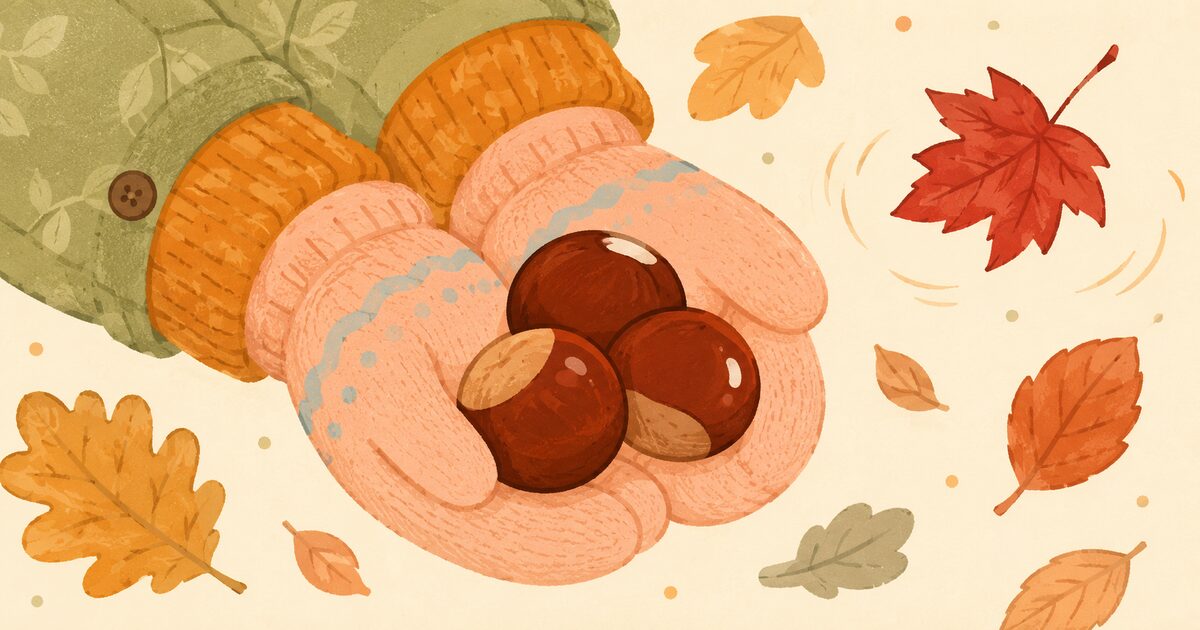
Summer gets the press, but ask any toddler: autumn is the good season. Things fall out of trees for free. Leaves become a percussion instrument you walk on. Mushrooms appear overnight like tiny installations. Puddles return after their summer sabbatical.
Autumn activities for toddlers barely need inventing — the season does the work, and it does it for two whole months. What follows is less a list of activities and more a field guide to the greatest free special-effects show in Britain, sorted by autumn's four main attractions.
Conker season
Roughly mid-September to the end of October. The squirrels are your competition. Take this seriously.
- The conker hunt proper. Find a horse chestnut tree (parks, church yards, old streets — ask around, every neighbourhood has a known tree). Go after a windy night. The shiny-in-the-case moment never, ever gets old.
- Conker counting house. Line them up on a wall. Count them. Recount them. Arrange by size. This is maths, and it is glorious.
- The pocket museum. One coat pocket is officially the conker pocket for the season. Inspect the collection at every opportunity. (Under-threes who still taste-test things: collection lives in your pocket instead.)
- Biggest conker contest. A season-long family championship. Current champion displayed on the windowsill like a trophy, because it is one.
- Conker planting. Push one into a pot of soil, label it grandly, forget about it, and be amazed in spring when a horse chestnut actually appears. Longest-burn activity in this post.
The crunch
- The leaf-kicking route. Learn your neighbourhood's crunchiest streets (big trees + dry days) and plan walks through maximum crunch. This is legitimate route-planning and we do it every year.
- Leaf showers. Gather an armful, throw upward, stand underneath. Repeat until someone falls over laughing. Photograph nothing; just be in it.
- The crunchiest leaf award. A rolling competition with strict judging: crunch volume, crunch duration, structural integrity. Winner carried home.
- Leaf pile archaeology. A good pile hides treasure: beetles, conkers, one very surprised worm. Excavate with sticks, catalogue the finds — champion material for our spoken scavenger hunts.
- Leaf catch. On a windy day, catch falling leaves mid-air. Ten points each, a hundred points if caught on your head. Cardio disguised as luck.
🦊 A whole deck of autumn
The Autumn Treasures pack in TrailFox is this post's big sibling: a full deck of conker, leaf, fungi and frost adventures, matched to your toddler's energy and wherever you're standing. The core app is free — no ads, no subscriptions, one small one-time purchase if you want the seasonal deck.


Fungi & finds
One rule, taught as part of the game: fungi are for looking, never touching. Like traffic. Toddlers accept this more readily than you'd think, especially with a job to do instead.
- The toadstool tiptoe. Tiptoe (quietly, that's the game) around logs, stumps and damp corners hunting fungi. Count the shapes: umbrellas, shelves, buttons, weird noodly ones. Eyes only, always.
- Spider web mornings. Early autumn dew turns every hedge into a gallery. Find the biggest web, the most perfect one, the one with the architect still home.
- Helicopter seeds. Sycamore seeds spin like rotors. Throw them high, watch them whirl, chase them down. Nature's fidget toy.
- Berry spotting (for the birds). Count the red berries, name who's coming to dinner — blackbirds, robins, "a dragon probably". Berries follow the fungi rule: look, don't pick.
- Seed pocket sorting. Acorns, beech nuts, sycamore keys — collect, then sort into piles by kind. The autumn version of the treasure pocket, with added taxonomy.
The cold snap bonus
Late autumn smuggles in a preview of winter, and the first cold mornings are an event if you frame them as one.
- First frost mission. The morning the grass turns white, go out before breakfast — five minutes in coats over pyjamas. Crunch the grass, write on a frosty car window (your own), inspect a silvered spider web.
- Breath dragons. Cold air makes every toddler a dragon. Big breath, roar, admire the smoke. This never stops being funny to them. Or, honestly, to us.
- Ice-lid puddles. The first frozen puddle demands testing: a gentle toe-tap, then the deeply satisfying crack. The sound alone is worth the cold hands.
- The huddle picnic. Hot chocolate in a flask, blanket, the same park bench as August. The picnic that proves outside didn't close for the season.
Go this week, not "sometime"
Autumn's whole personality is impermanence — conker season is six weeks, the crunch depends on dry days, and the first frost happens exactly once. The parents who get the good stuff aren't more organised; they just treat autumn like a limited-run show, because it is. Twenty minutes counts, as ever — and if it's raining, even better: our rainy day guide and this post stack beautifully.
For everything that isn't season-dependent, the big toddler guide has thirty more no-prep ideas sorted by where you're standing. Two autumn spin-offs go deeper than this guide can: twelve things to do with conkers for September, and Halloween nature activities for when it goes dark at teatime.
Quick answers
What age can toddlers play with conkers?
Any age with supervision — the joy is hunting, collecting and counting, none of which involves mouths. Conkers are a choking hazard for children who still taste-test the world, so keep them in pockets and pots rather than little fists at that stage, and put the collection out of reach at home.
Are toadstools dangerous for toddlers?
Only if touched or eaten, so autumn fungi hunts run on one rule: eyes only, never fingers. Taught as part of the game ("fungi are for looking, like traffic"), toddlers accept it surprisingly well — and spotting shapes and colours is the whole fun anyway.
What should toddlers wear for autumn walks?
Layers under a waterproof, wellies with room for thick socks, and nothing you'd mourn. Autumn play is mud-adjacent by design — dress for the washing machine, not the photo album.
When does conker season start in the UK?
Conkers usually start dropping in mid-to-late September, peaking through October. Go after a windy night for the richest harvest — and going early beats going often, because the squirrels are not waiting for you.
What about the truly filthy autumn days?
Trick question — those are the best ones. Rain plus autumn means mud kitchens, puddles with leaf soup and empty parks. Twenty minutes in a puddle suit followed by hot chocolate beats a whole afternoon of the sofa; our rainy day guide has the full argument.