 TrailFox
Scavenger hunts
12 Toddler Scavenger Hunt Ideas — No Printables Needed
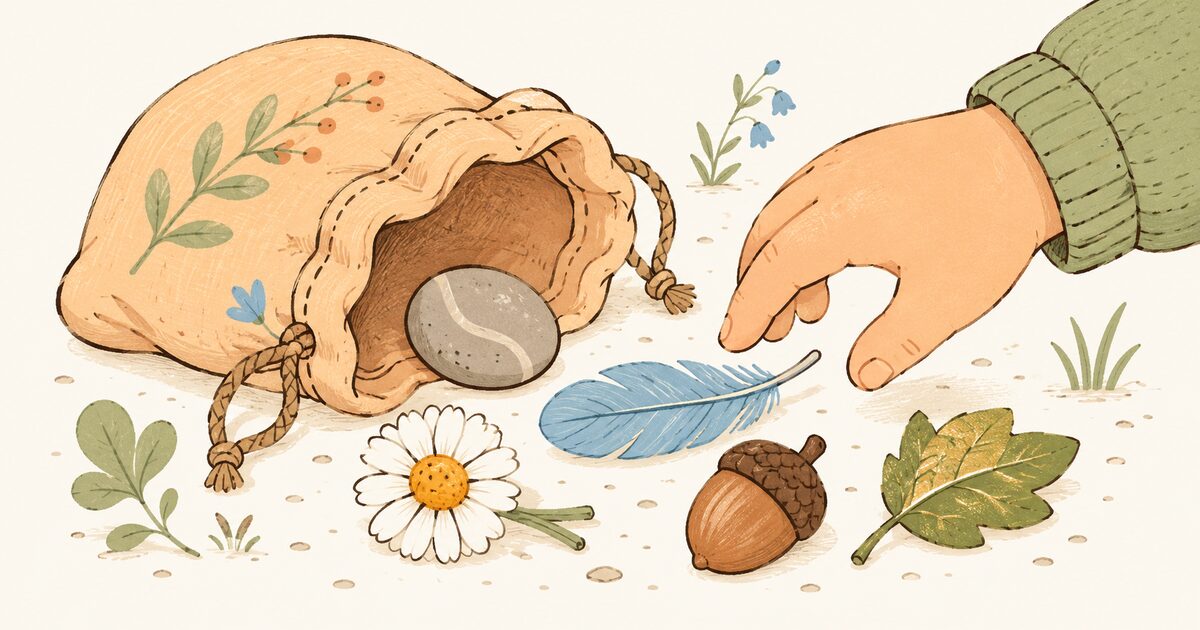
Somewhere along the way, the humble scavenger hunt got complicated. Search for one online and you'll be offered a PDF to download, print, laminate ("so you can reuse it!") and clip to a special clipboard. For a person who cannot read.
Here's the liberating truth: a toddler scavenger hunt is just you saying "can you find…?" out loud. That's the whole technology. No printer. And because it's spoken, you can adjust it live — easier when they flag, sillier when they're losing interest, longer when it's going brilliantly.
Twelve formats, for ages roughly 2–5. Each works in a garden, park, street or wood.
The classics, spoken aloud
- The colour hunt. "Find me something red… now something yellow…" Work through the rainbow. For 2-year-olds, stick to two or three colours; 4-year-olds can handle "something red AND round".
- The counting hunt. One stone, two sticks, three leaves, four petals, five blades of grass. Sneaky number practice, and the gathering keeps little legs moving.
- The treasure pocket. Five treasures to find before home: something round, something that smells, something older than Grandma, something a bird would like, something beautiful. The debrief over the haul is half the fun.
- The tiny hunt. Everything found must fit on a 2p coin. Suddenly the world is full of miniature treasure: a seed, a petal, an ant-sized pebble. Excellent for slowing down a walk that's become a route march.
The five-senses hunts
These are our favourites, because they work the senses one at a time — and they're exactly how the TrailFox nature journal thinks about noticing (every entry records who spotted it and which sense they used).
- The texture hunt. Find something rough, smooth, fluffy, crunchy, tickly, squishy. A scavenger hunt for hands. Mud counts as squishy. Mud always counts.
- The sound hunt. Stand still. Collect five sounds: a bird, a dog, wind, a van, a mystery. Point at each with eyes closed. The stillness is brief but miraculous.
- The smell hunt. Grass, flowers, rain on pavement, someone's dinner cooking. Toddlers report smells with total honesty, so brace yourself.
- The looking-up hunt. Everything must be found above head height: a bird, a chimney, a plane, a cloud shaped like a dinosaur. Fixes the toddler tendency to only inspect the ground.
🦊 TrailFox does the "can you find…?" for you
The free TrailFox app is full of spotting and hunting activities matched to where you are — plus a family nature journal to photograph the treasure and record who found it. No ads, no subscriptions, and nothing to laminate.


The story hunts
- The fairy shopping list. "The fairies need: one soft leaf for a blanket, one acorn cup, one petal umbrella, one very small stick for a broom." Deliver the shopping to a tree hollow and knock. Devastatingly effective with 3-year-olds.
- The dragon egg hunt. Smooth round stones are dragon eggs. Find three, carry them home carefully, keep them warm. Works for weeks — some dragons take ages to hatch, apparently.
- The bear hunt kit. Going on a bear hunt requires supplies: a walking stick, a berry (pretend), a map leaf, binocular hands. Assemble the kit, then conduct the hunt. We can't say there'll be a bear; we can say there'll be a nap.
- The birthday hunt. Someone — teddy, the dog, an agreeable shrub — is having a birthday. Find them a present, decorations and a leaf cake. Sing. This one has genuinely saved birthdays-party-drought summers.
Making any hunt work with a toddler
- Three items is plenty for a 2-year-old. Five for a 3-year-old. If the hunt ends early, the hunt was the right length.
- They find, you narrate. Your job is colour commentary: "A ROUND stone? Show me! That's the roundest one I've ever seen."
- Everything found is correct. If you asked for red and they bring a snail, the hunt is now about snails. Congratulations on your snail hunt.
- Rain improves it. Wet weather adds puddles, snails, drips and shine to every list — see our rainy day outdoor activities for the full argument.
Want thirty more no-prep ideas sorted by location? Start with the big guide: outdoor activities for toddlers. And if they're less "gentle noticing" and more "bouncing off the walls" today, you want the energy-burning list instead. In autumn the hunts get easier, because the woods do half the work: try woodland activities for children, or a pocketful of conkers.
Quick answers
What do you put in a toddler scavenger hunt?
Things they can find with their senses, not read from a list: something red, something tickly, something that smells, something round, something a bird would like. Three items is plenty for a 2-year-old, five for a 3-year-old — and anything they proudly bring back counts as correct.
How do you do a scavenger hunt with a 2 year old?
Say it out loud, one item at a time: "Can you find me something yellow?" Then narrate the find like a sports commentator. Skip lists entirely — at two, the hunt is really a walk with missions attached, and the missions bend to whatever they discover.
Do I need to print a scavenger hunt checklist?
No — toddlers can't read, so a printed checklist is for you, and you don't need it either. A spoken hunt adjusts live: easier when they flag, sillier when attention drifts, longer when it's going brilliantly. The printer stays retired.
How long should a toddler scavenger hunt last?
Ten to twenty minutes is the natural lifespan. If it ends after four minutes because a snail appeared, the snail is the activity now and the hunt was still a success. Ending early with enthusiasm beats finishing a list with a grump.
What is a sensory scavenger hunt?
A hunt that works one sense at a time: find something rough, smooth or squishy (touch), collect five sounds (hearing), hunt for smells like grass or rain on pavement. Sensory hunts suit the youngest children best because noticing beats naming — no reading or rules required.