 TrailFox
Seasonal
Things to Do With Conkers: 12 Games Beyond the Fight
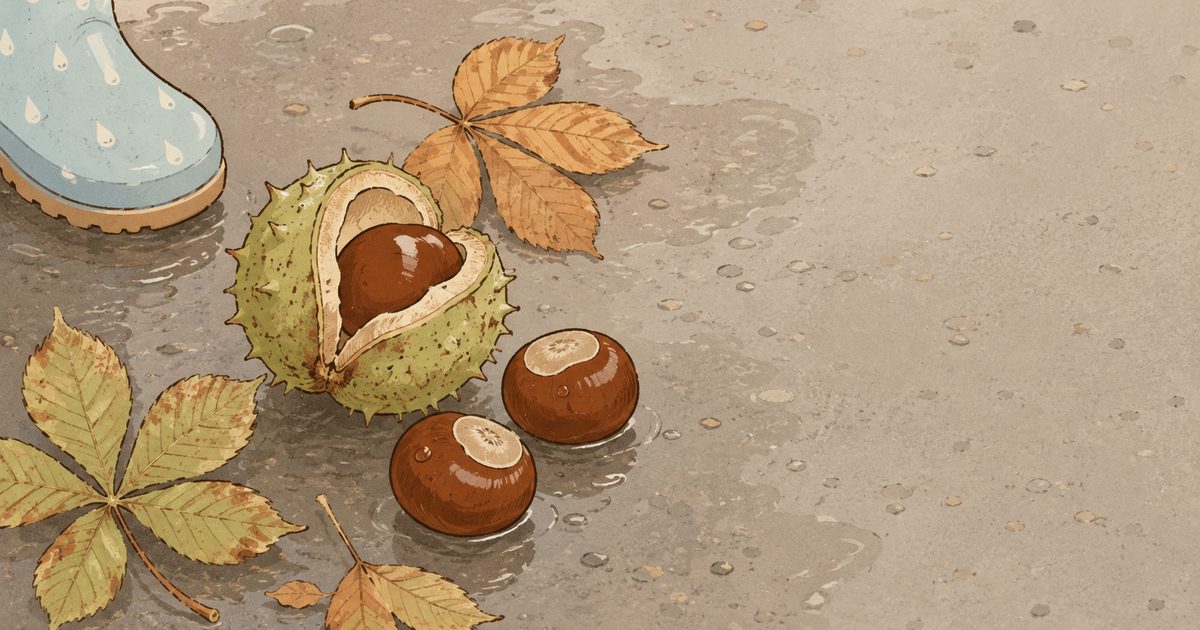
Every September the same thing happens. You go out for twenty minutes, you come back with a child whose coat weighs four kilograms, and by October there is a bowl of wrinkled brown conkers on the windowsill that nobody is allowed to throw away.
So here are twelve things to do with conkers that are not a conker fight. Nothing against the conker fight, and we get to it at the end, but a fight on a string needs a drill, a shoelace and a child over about six. Everything else here works from age two, outdoors, with nothing but the conkers you already have.
Three things worth knowing first
Conkers come from horse chestnut trees, which are the big ones in parks, churchyards and playing fields with the palm-shaped leaves. They are not the sweet chestnuts you roast, and they are not edible. With toddlers the rule is simple and easy to teach: pockets, not mouths, and wash hands after. Handling them is completely fine.
The best time to go is the morning after a windy night. And the real prize is not a loose conker on the path, it is a spiky green case that still has one inside, because opening it is the best part.
The finding games
- The case stamp. Find a green spiky case, put it on the ground, stand on it and roll your foot. It splits and reveals the shiniest thing your child has ever seen. That first-second shine is genuinely spectacular and it fades within a day, which is a lovely thing to point out.
- Biggest, smallest, shiniest. Three categories, one walk. Everyone submits an entry at the end and you judge with completely made-up seriousness. It turns a slow trudge home into a competition.
- The one-handed rule. You may only keep what you can carry in one hand. This is not a game, it is a survival tactic, and it is the single most useful sentence in this entire article.
- Conker treasure hunt. You hide five in an obvious ten-metre stretch of park while they count to twenty, then they find them. Toddlers will play this until you physically cannot bear it any more. It is the same engine as our other toddler scavenger hunt ideas, just with better props.
🦊 More autumn missions, chosen in thirty seconds
The free TrailFox app suggests an outdoor activity matched to your child's energy and where you are, so you are not standing in a park inventing games from scratch. The Autumn Treasures pack runs through conker season, leaf hunts and fungi safaris, with a nature journal to photograph the haul. No ads, no subscriptions.


Games for a pocket of conkers
- Slide races. The park slide becomes a racetrack. Two conkers, one each, released at the same time. Undignified levels of excitement for something that takes four seconds.
- Slope rolling. Any hill, any kerb, any ramp. Which one goes furthest, which one veers off, which one gets lost in the grass forever. Losing one is part of it.
- Puddle physics. Drop them in and watch. Fresh conkers usually sink, older dried ones sometimes bob about. No explanation required, the watching is the activity. Add this to the rainy day list and a wet walk suddenly has a plot.
- Counting and sorting. Lay them on a wall in a line. Count them, sort them by size, put them in colour order from pale to almost black. Quietly excellent early maths, disguised as messing about.
- The conker trail. Lay a line of them along a path for someone else to follow, like breadcrumbs. Works brilliantly with two children, or with one child and a very patient adult who agrees to be lost.
What to do with them afterwards
- The tree-hollow stash. Pick a hollow, a root gap or a wall crevice and make it the official treasure store. Come back next week and see if anything has moved it. Squirrels do not actually want conkers much, which makes the ones that vanish more mysterious.
- A conker in every room. The old belief that conkers keep spiders away is nonsense, but placing one in every corner of the house with total ceremony is a fifteen-minute activity and costs nothing.
- Give them back. At the end of the season, walk the collection back to the tree and tip it out. It saves the February bowl of shrivelled disappointment, and it turns the clearout into a proper ending. Our five-year-old says goodbye to each one individually, which takes some time.
And the conker fight, done properly
For the over-sixes: you drill it, you thread it, you take turns. The classic hardening tricks, vinegar and the oven, are cheating and everyone knows it. Under six, skip the string entirely. Rolling, hiding and counting are better games at that age and nobody gets a knuckle.
Conkers are the gateway to the best season Britain has. For the rest of the autumn programme, from the leaf crunch through to fungi and the first frost, read autumn activities for toddlers. Once the clocks go back and it is dark at teatime, move straight on to Halloween nature activities. And for the year-round no-prep library sorted by where you are, start with outdoor activities for toddlers.
Quick answers
When is conker season in the UK?
Conkers start dropping in September and carry on through October, with the best few weeks usually falling in late September. A windy night is the signal: go the next morning, before the school run has stripped the good ones, and look under any big horse chestnut tree in a park, churchyard or playing field.
Are conkers poisonous to children?
Conkers are not edible and should never be eaten, so with toddlers the rule is pockets not mouths, and wash hands afterwards. Handling and playing with them is fine and always has been. If a child does swallow one, ring 111 for advice. They are also not the same as the sweet chestnuts you roast.
What can you do with conkers apart from a conker fight?
Plenty, and most of it suits under-fives better than a fight on a string. Roll them down slides and slopes as races, use them as counters, hide and hunt them, sort them by size, build a treasure stash in a tree hollow, or float them in a puddle to see which ones sink.
How do you find the best conkers?
Go the morning after a windy night, and look for the spiky green cases rather than loose conkers, because the good ones are often still inside. Stamping a case open is half the appeal. The shiniest conker is always the one that has just come out, and the shine fades within a day or two.
What do you do with conkers at the end of the season?
Give them back. Tip the collection out under the tree they came from, or in a hedge, and let them rot down or get taken by squirrels and mice. It saves you finding a wrinkled bowl of them in February, and it turns the ending into an activity rather than a clearout.
Do conkers really keep spiders away?
It is an old British household belief rather than something anyone has demonstrated, and conkers in the corners of a room do not appear to move spiders on. It is still a good excuse to let a four-year-old place one in every room of the house with enormous ceremony.